Janome HD3000 Instruction Manual: A Comprehensive Guide
This comprehensive guide details the Janome HD3000 sewing machine, offering 48 pages of instructions, safety guidelines, and operational insights in PDF format․
Numerous online resources provide instant PDF downloads of the user manual, covering essential parts, functions, and maintenance procedures for seamless sewing experiences․
The Janome HD3000 is a robust and reliable mechanical sewing machine, celebrated for its durability and straightforward operation․ This machine is particularly well-suited for beginners and experienced sewists alike, offering a blend of simplicity and capability․
This instruction manual serves as your primary resource for understanding and utilizing all the features of your HD3000․ Within these pages, you’ll find detailed explanations of the machine’s components, step-by-step threading instructions, and guidance on performing basic and advanced sewing techniques․
Available as a 48-page PDF, the manual emphasizes safety precautions and provides a complete user guide to ensure a smooth and enjoyable sewing experience․ Whether you’ve just unboxed your machine or are seeking to troubleshoot a specific issue, this document is designed to be your go-to reference․
Furthermore, readily accessible online, the manual offers instant downloads, making it convenient to access information whenever and wherever you need it․ It’s a vital tool for maximizing the potential of your Janome HD3000․
Key Features and Specifications
The Janome HD3000 boasts a heavy-duty construction, designed for tackling a wide range of fabrics, from lightweight cottons to heavier denim․ Its mechanical operation ensures reliability and ease of use, without the complexities of computerized machines․
Key features include 15 built-in stitches, providing versatility for various sewing projects․ Adjustable stitch length and width allow for customization, while the drop-in bobbin system simplifies bobbin replacement․ The machine also incorporates a reverse stitch function for secure seam finishing․
Specifications detailed in the 48-page instruction manual highlight its robust motor and durable metal frame․ The manual provides comprehensive information on needle types, recommended fabric settings, and troubleshooting tips․
Accessibility is enhanced through readily available PDF downloads, offering instant access to detailed specifications and operational guidance․ This ensures users can quickly understand and utilize the machine’s full capabilities, maximizing project outcomes․
Setting Up Your Janome HD3000
Initial setup involves carefully unboxing the machine, inspecting all components, and referencing the 48-page instruction manual for detailed guidance on preparation․
Unboxing and Initial Inspection
Upon receiving your Janome HD3000, carefully open the box and remove all packaging materials․ A thorough initial inspection is crucial to ensure all components are present and undamaged․ Verify the inclusion of the sewing machine itself, the power cord, the foot controller, various presser feet (standard, zipper, buttonhole – check your model’s specifics), bobbins, needle set, screwdriver, seam ripper, and the instruction manual – a 48-page document providing comprehensive guidance․
Inspect the machine body for any visible scratches or dents that may have occurred during shipping․ Check the power cord and foot controller for any signs of damage․ Ensure all accessories are present and in good condition․ Refer to the manual’s parts diagram to confirm you have everything listed․ If any items are missing or damaged, immediately contact the retailer or Janome customer support for assistance․ Document any issues with photographs for a smoother resolution process․ A careful unboxing and inspection protect your investment and ensure a positive sewing experience․
Threading the Machine
Correct threading is essential for proper stitch formation on your Janome HD3000․ Begin by raising the presser foot; this opens the tension discs․ Follow the numbered threading path clearly illustrated in your 48-page instruction manual․ Start with the spool pin, guiding the thread down through the first thread guide, then around the tension discs․ Next, lead the thread through the take-up lever and down to the needle bar․
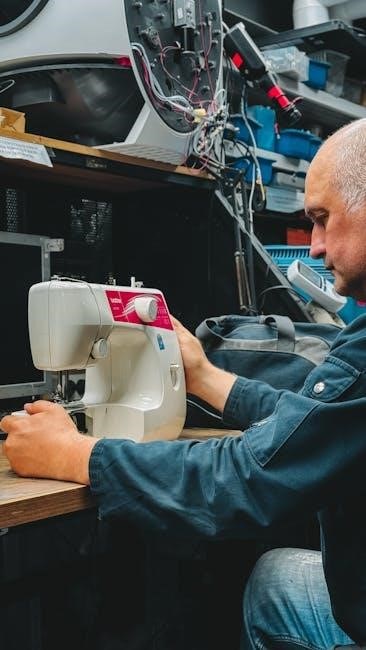
Finally, thread the needle from front to back, using the needle threader if needed․ Ensure the thread is securely seated in the needle’s eye․ Lower the presser foot to re-engage the tension․ Pull a few inches of thread through the needle․ Incorrect threading will result in skipped stitches or tangled thread, so carefully review the manual’s diagrams․ Practice this process until it becomes familiar and efficient for optimal sewing performance․
Winding the Bobbin
Proper bobbin winding is crucial for consistent sewing with your Janome HD3000․ Place the spool of thread on the spool pin․ Guide the thread through the designated thread guides leading to the bobbin winder․ Position the bobbin onto the bobbin winder spindle, ensuring it clicks into place․ Push the bobbin winder to the right to engage it․
Press the foot pedal gently to start the winding process․ The machine will automatically stop when the bobbin is full․ Disengage the bobbin winder and remove the full bobbin․ Trim the thread and insert the bobbin into the bobbin case, following the manual’s instructions for correct orientation․ Consistent bobbin winding ensures even tension and prevents issues during sewing․ Refer to the 48-page manual for detailed diagrams and troubleshooting tips․
Basic Sewing Operations
Mastering fundamental techniques with the Janome HD3000 involves stitch selection, adjusting length/width, and choosing appropriate fabrics and needles for optimal results․
Selecting Stitches
The Janome HD3000 offers a versatile range of stitches, catering to diverse sewing projects․ Understanding stitch selection is crucial for achieving professional results․ Begin by locating the stitch selection dial, typically positioned on the front of the machine․ This dial allows you to cycle through various stitch patterns, including straight stitch, zigzag stitch, and decorative options․
Refer to the stitch chart within the instruction manual to identify the appropriate stitch for your fabric and desired outcome․ For general sewing, a straight stitch is ideal․ Zigzag stitches are excellent for finishing raw edges and creating stretch seams․ Decorative stitches add embellishment and personalization to your creations․
Experiment with different stitch settings to observe their effects on fabric․ Always test the selected stitch on a scrap piece of fabric before commencing your project․ Proper stitch selection ensures durability, aesthetics, and overall project success with your Janome HD3000․
Adjusting Stitch Length and Width
Precise control over stitch length and width is fundamental to achieving optimal sewing results with the Janome HD3000․ These adjustments directly impact the fabric’s appearance and the seam’s strength․ Locate the stitch length dial, usually marked with numerical values representing millimeters․ Lower numbers create shorter stitches, ideal for delicate fabrics, while higher numbers produce longer stitches suitable for heavier materials․
The stitch width dial controls the breadth of zigzag and decorative stitches․ A narrower width is suitable for reinforcing seams, while a wider width creates bolder patterns․ Always test adjustments on scrap fabric before sewing your project․
Consult the instruction manual’s guidelines for recommended settings based on fabric type and stitch selection․ Incorrect settings can lead to puckering, skipped stitches, or weakened seams․ Mastering these adjustments unlocks the full potential of your Janome HD3000․
Fabric Selection and Needle Types
Choosing the correct needle and matching it to your fabric is crucial for successful sewing with the Janome HD3000․ Universal needles (size 80/12, 90/14, 100/16) work well for woven fabrics․ Ballpoint needles (size 75/11, 90/14) are designed for knit fabrics, preventing skipped stitches and fabric runs․
Denim or jeans needles (size 90/14, 100/16) are robust enough to penetrate heavy-duty materials․ Lightweight fabrics require finer needles (60/8, 70/10), while heavier fabrics demand larger ones (110/18)․
Always refer to the Janome HD3000 instruction manual for specific recommendations․ Using the wrong needle can damage both the fabric and the machine․ Regularly replace needles to maintain stitch quality and prevent breakage․ Proper needle selection ensures smooth, professional-looking results․
Advanced Sewing Techniques
Mastering techniques like buttonholes, zipper insertion, and reverse stitching unlocks the Janome HD3000’s full potential, enhancing your sewing projects significantly․
Using the Reverse Stitch
The reverse stitch function on the Janome HD3000 is crucial for securing seams at the beginning and end of a sewing line, preventing unraveling and ensuring durability․ This feature is typically activated by a dedicated reverse button or lever located near the handwheel or foot control․
To utilize the reverse stitch, begin sewing your desired seam․ When you reach the point where you want to secure the seam, depress the reverse button/lever and gently sew backwards over a short distance – usually about half an inch is sufficient․ Release the reverse control and continue sewing forward to complete the seam․
Experiment with the length of the reverse stitching to find what works best for your fabric and project․ For heavier fabrics, a slightly longer reverse stitch may be necessary for added security․ Regularly consult your Janome HD3000 instruction manual for specific guidance and diagrams illustrating the proper technique, ensuring optimal results and preventing potential issues with stitch formation․
Sewing Buttonholes
The Janome HD3000 offers a convenient one-step buttonhole function, simplifying the process of creating professional-looking buttonholes․ Before starting, ensure you’ve selected the appropriate buttonhole foot for your machine․ Consult your instruction manual for the correct foot attachment and setup․
To begin, measure the diameter of your button and adjust the buttonhole length setting on the machine accordingly․ The manual provides a detailed chart correlating button size to the correct setting․ Place the button under the buttonhole foot and lower the presser foot․
Slowly depress the foot control, allowing the machine to automatically stitch around the buttonhole․ The HD3000 will automatically stop and pivot at each corner․ Once complete, carefully remove the fabric and snip the buttonhole open, avoiding damage to the stitching․ Practice on scrap fabric first to master the technique and achieve consistent results․
Zipper Insertion
The Janome HD3000 simplifies zipper insertion with its dedicated zipper foot․ Begin by selecting the appropriate zipper foot and attaching it to the machine․ Position the zipper face down, with the zipper teeth aligned along the edge of the fabric․ Lower the presser foot and carefully begin stitching close to the zipper teeth, guiding the fabric evenly․
For a centered zipper, stitch along one side, then flip the fabric and stitch along the other side, ensuring the zipper remains centered․ The instruction manual illustrates different zipper application techniques, including lapped and invisible zippers․
Maintain a consistent seam allowance throughout the process for a professional finish․ Practice on scrap fabric to refine your technique and achieve smooth, even stitching․ Remember to backstitch at the beginning and end of each seam to secure the zipper in place․

Maintenance and Troubleshooting
Regular cleaning and oiling are crucial for optimal performance; the manual details these procedures․ Common issues and solutions are also provided for the HD3000․
Cleaning and Oiling
Maintaining your Janome HD3000 requires regular cleaning to remove lint and dust buildup, ensuring smooth operation and preventing mechanical issues․ Always disconnect the power before performing any maintenance․ Use a soft brush, supplied with the machine or a similar one, to gently remove debris from the bobbin area, feed dogs, and around the needle plate․
For more thorough cleaning, a lint brush or vacuum cleaner with a brush attachment can be used․ Avoid using compressed air, as it can blow dust further into the machine․ Oiling is equally important; apply a few drops of sewing machine oil to the designated oiling points as indicated in the instruction manual – typically around the bobbin case, hook, and motor shaft․
Do not over-oil, as excess oil can attract dust and create a sticky residue․ Wipe away any excess oil with a clean, soft cloth․ Regular cleaning and oiling, performed as recommended in the manual, will significantly extend the life of your Janome HD3000 and maintain its sewing performance․
Common Problems and Solutions
Encountering issues with your Janome HD3000? Several common problems have straightforward solutions․ Thread bunching often indicates incorrect threading, improper bobbin winding, or incorrect tension settings – re-thread the machine and adjust tension dials․ Skipped stitches can be caused by a dull or incorrect needle type for the fabric; replace the needle with a suitable one․
If the machine jams, stop immediately, disconnect the power, and carefully remove the fabric and any tangled thread․ Bobbin issues, like the bobbin not winding correctly, usually stem from improper bobbin placement or tension․ Refer to the manual for detailed diagrams and troubleshooting steps․
Persistent problems may require professional servicing․ Always consult the Janome HD3000 instruction manual for specific guidance and safety precautions before attempting any repairs․ Remember, preventative maintenance, like regular cleaning, minimizes these issues․
Finding the HD3000 Manual Online (PDF Download)
Locating a Janome HD3000 instruction manual online is remarkably easy․ Numerous websites offer free PDF downloads, providing immediate access to comprehensive guides․ A quick internet search for “Janome HD3000 Instruction Manual PDF” yields several results, including direct links to downloadable files․
Many sewing machine resource sites and online communities host these manuals, ensuring accessibility for all users․ The standard HD3000 manual typically spans 48 pages, covering everything from initial setup to advanced techniques and troubleshooting․ Instant PDF downloads are readily available, eliminating the need for physical copies․
Ensure the downloaded file is from a reputable source to avoid malware․ User manual websites often provide complete user guides in English, simplifying the learning process․ Keep a digital copy for convenient reference whenever needed․
Safety Precautions
The Janome HD3000 manual strongly emphasizes safety guidelines, covering general precautions and electrical safety to prevent accidents during operation and maintenance․
General Safety Guidelines
Prior to operating the Janome HD3000, carefully review the instruction manual’s safety section to understand potential hazards and preventative measures․ Always disconnect the machine from the power source before threading, changing the needle, or performing any maintenance․ Never operate the sewing machine if the power cord or plug is damaged․
Keep fingers away from moving parts, such as the needle and presser foot, during operation․ Do not sew over pins or thick fabric layers, as this can damage the needle and machine․ Use only genuine Janome accessories and attachments to ensure compatibility and safety․ Always supervise children when they are near the sewing machine․
Ensure the machine is placed on a stable, level surface during use․ Avoid using the machine in damp or wet environments․ Regularly inspect the machine for any signs of damage or wear, and address any issues promptly․ Proper understanding and adherence to these guidelines will contribute to a safe and enjoyable sewing experience with your Janome HD3000․
Electrical Safety
To ensure electrical safety when using your Janome HD3000, always verify the voltage indicated on the machine matches your household power supply․ Never operate the machine with a damaged power cord or plug; replace them immediately․ Avoid using extension cords if possible, and if necessary, ensure they are appropriately rated for the machine’s power consumption․
Always unplug the sewing machine from the electrical outlet before performing any maintenance, changing the needle, or cleaning․ Do not immerse the machine, power cord, or plug in water or any other liquid․ Keep the machine away from heat sources and flammable materials․
Regularly inspect the power cord for any signs of wear or damage․ If the machine malfunctions or exhibits any electrical issues, discontinue use immediately and consult a qualified technician․ Proper electrical safety practices are crucial for preventing hazards and ensuring the longevity of your Janome HD3000․